With AK PLUS, AluK introduces a new generation of hardware designed to simplify fabrication while expanding performance and application possibilities. More than a product launch, AK PLUS represents a rethinking of hardware architecture, reducing complexity, improving industrial efficiency, and creating a scalable platform for future developments.
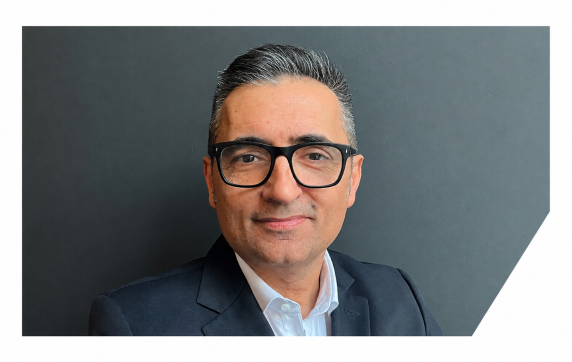
In this interview, Massimo Cuppini, Global Hardware R&D Manager and Technical Director at AluK Italy, shares the engineering vision, customer-driven insights, and strategic role behind AK PLUS.
AK PLUS is more than a new hardware range. Why did AluK decide to develop it?
Massimo Cuppini:
AK PLUS started with a simple observation: our hardware portfolio had become overly complex. Over time, we had added IW and K accessories, multiple kits, and different assembly logics. It worked well, but it wasn’t intuitive.
So we asked ourselves a fundamental question: can we reduce complexity without compromising performance?
AK PLUS is our answer. This was not about launching another product. It was about redesigning the architecture of our hardware system from the ground up.
How did you approach the development of AK PLUS from an engineering and industrial perspective?
Massimo Cuppini:
We worked on three key levels.
First, system simplification. We consolidated previous ranges, reduced the number of SKUs by around seventy, and replaced multiple kit combinations with a harmonised structure.
Second, industrial efficiency. We eliminated the telescopic rod and introduced a new system rod. We also standardised drilling logic and reduced the number of machining steps.
Third, modularity. We now have one assembly logic and multiple configurations, ranging from 100 kg to 180 kg today and up to 250 kg in the near future. The objective was clear: to apply the same assembly philosophy to a wider range of applications. Overall, we reduced complexity without reducing capability.
What technically differentiates AK PLUS from previous generations?
Massimo Cuppini:
Several elements, all driven by the same principle: coherence.
AK PLUS is a unified platform with shared components across the 130 kg and 180 kg versions. It integrates RC2 solutions without the need for a structural redesign, introduces new materials, and delivers certified performance in accordance with EN standards and IFT Rosenheim. We have also filed European patents for key solutions.
However, the real difference goes beyond technical features: AK PLUS is a single, coherent system, not a collection of parts.
How did customer feedback influence the project?
Massimo Cuppini:
Very directly. Fabricators don’t ask for complexity, they ask for clarity.
They want fewer references to manage, predictable assembly logic, and reliable performance.
AK PLUS was designed around real workshop conditions, not just technical drawings. Listening was essential, but translating feedback into structural simplification was the real challenge.
What benefits does AK PLUS deliver to fabricators and end users?
Massimo Cuppini:
For fabricators: lower stock levels, fewer errors, faster assembly.
For end users: greater durability, certified security, and clean, consistent aesthetics.
We reduced internal complexity while increasing perceived quality. That balance is critical.
How does AK PLUS fit into AluK’s broader innovation strategy?
Massimo Cuppini:
AK PLUS is a platform. It enables future developments – new materials, automation compatibility, higher resistance classes – without having to redesign the system each time. This reflects our approach to innovation: intelligent simplification, not accumulation.
Any final thoughts?
Massimo Cuppini:
With AK PLUS, we did something quite simple: we made the system clearer. And when a system becomes clearer, performance, efficiency, and design naturally follow. That is the future of hardware.